1. The Door That Saves Lives, Not Just Space
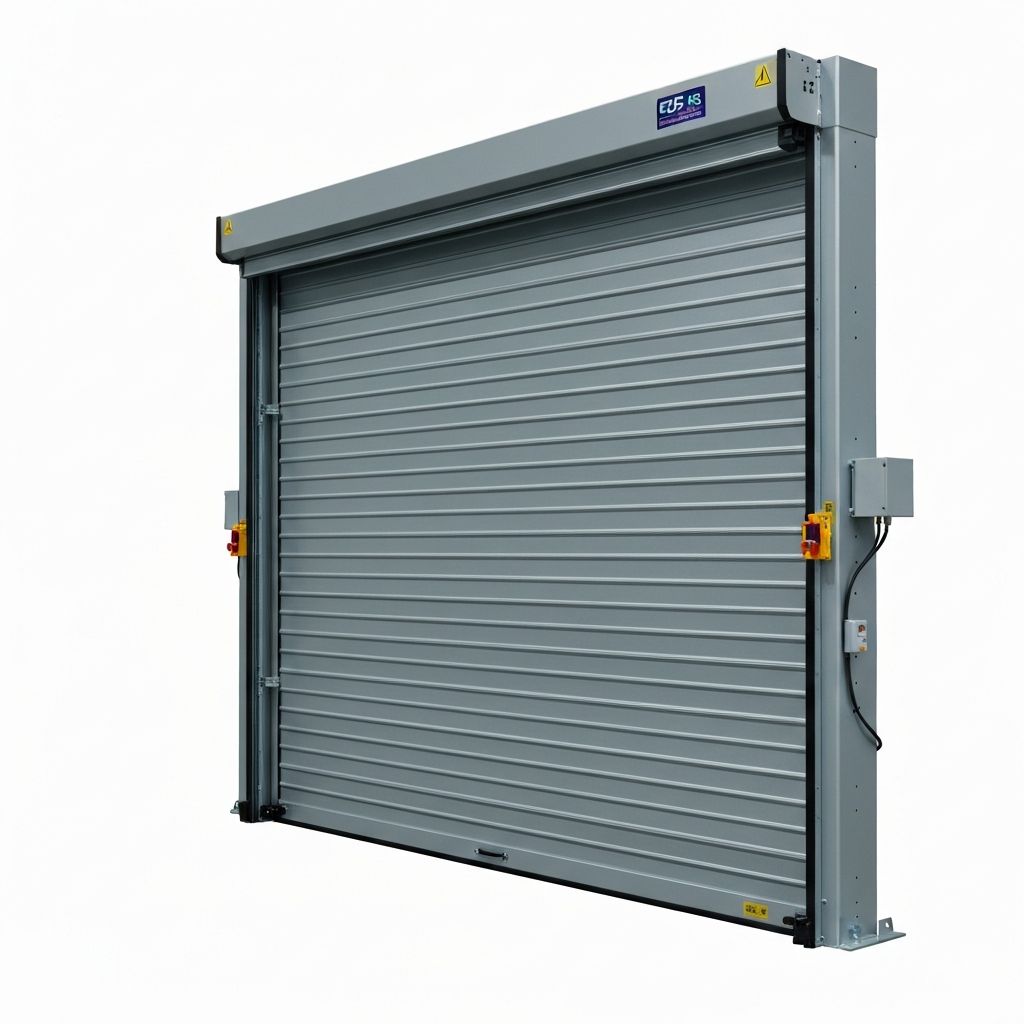
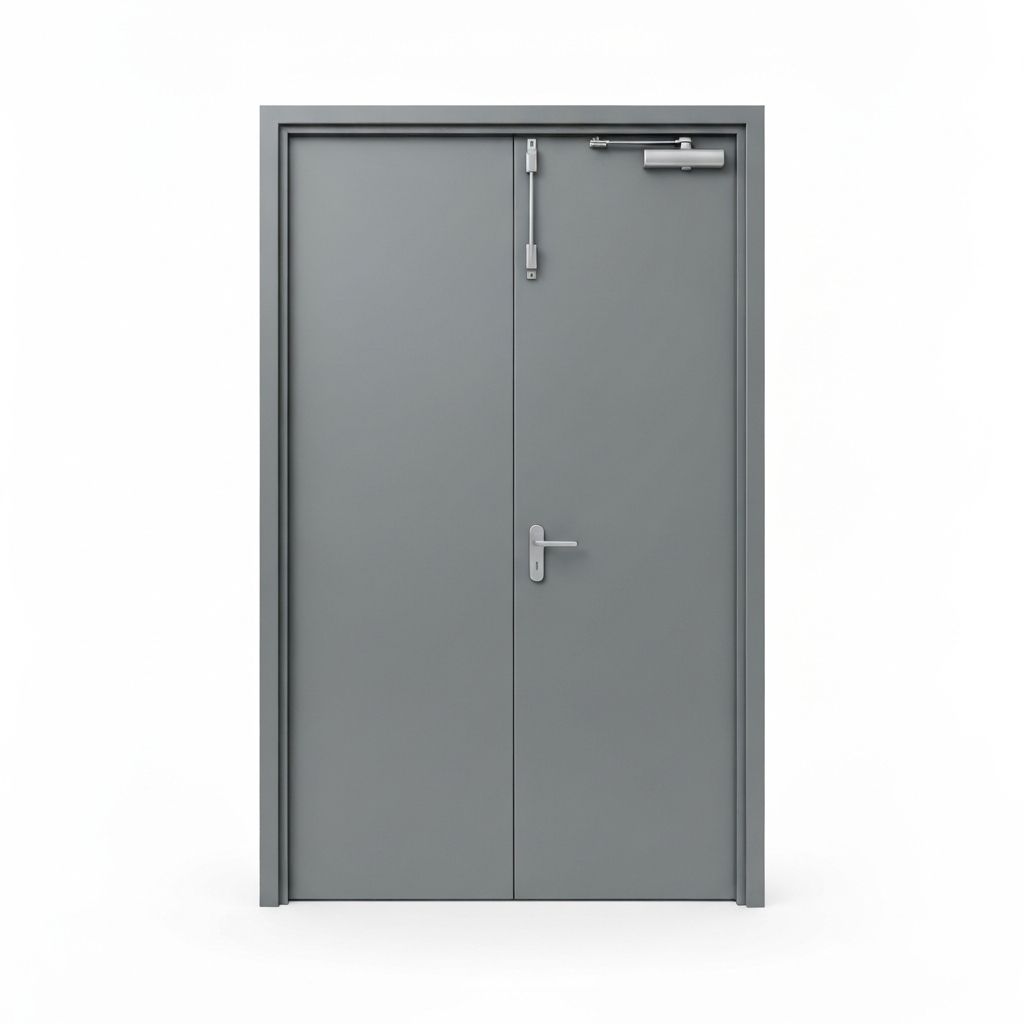
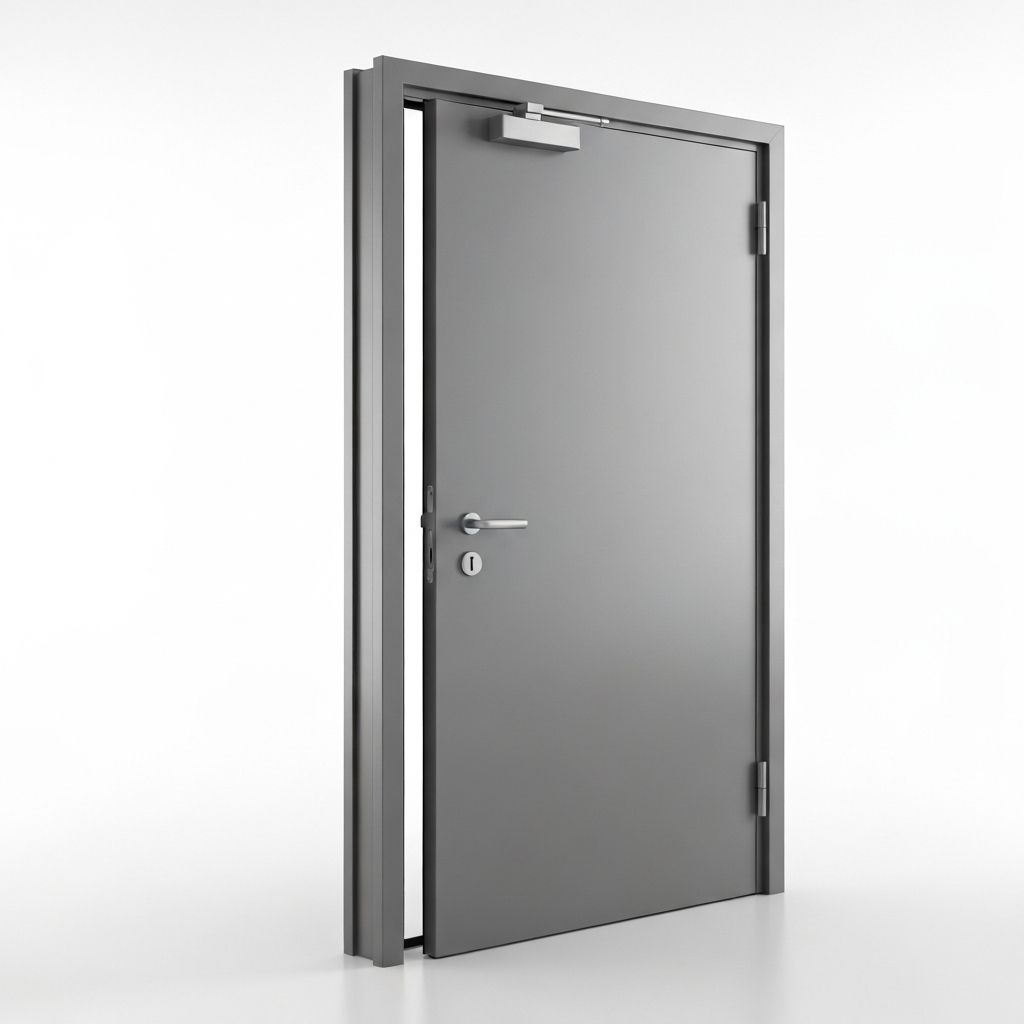
A fire door looks unremarkable. It swings. It closes. It sits in a hallway doing nothing most of the time. But during a fire, that same door becomes a structural barrier that must hold back flames, block toxic smoke, and keep the unexposed side cool enough to touch—for 30 minutes, 60 minutes, 90 minutes, or longer, depending on its rating.
This is not a trivial engineering problem. A standard fire test pushes the furnace temperature past 900°C within minutes. On the unexposed side, the door surface should not exceed an average temperature rise of 140°C above ambient—because if it does, materials on the safe side of the door can ignite without ever seeing a flame.
That is the insulation integrity challenge in a single number: hold a 900°C thermal assault to a 140°C temperature rise on the cold face for the rated duration.
The global fire door market was valued at approximately USD 13.2 billion in 2024 and is projected to reach USD 19.7 billion by 2034, growing at a CAGR of 4.2%. That growth is not just construction-driven. It reflects tightening building codes and expanded liability awareness across commercial and industrial construction.
2. Rating Labels Decoded: A, B, C—and What the Letters Actually Enforce
The "fire door rating" conversation goes sideways quickly when different naming systems collide. In China, the national standard GB 12955-2024 classifies fire doors into three categories:
| Class | Type | Requirements |
|---|---|---|
| Class A | Insulated | Must meet both integrity (flame and smoke resistance) AND thermal insulation requirements |
| Class B | Partially Insulated | Insulation requirement capped at 0.5 hours, with longer integrity ratings |
| Class C | Non-Insulated | Must maintain integrity but has no thermal insulation requirement |
Within the A-class insulated category, the three-tier grading most commonly referenced:
- A0.50 (Grade C, 0.5h)
- A1.00 (Grade B, 1.0h)
- A1.50 (Grade A, 1.5h)
For stairways and fire compartments in high-occupancy buildings, project specs routinely require A1.50 or higher.
International Rating Systems
| Certification System | Rating Examples | Insulation Required? | Primary Regions |
|---|---|---|---|
| GB 12955-2024 (China) | A1.50, B1.00, C1.00 | Yes (A), Partial (B), No (C) | China |
| BS 476-22 (FD rating) | FD30, FD60, FD120 | Not required for FD designation | UK, Commonwealth |
| EN 1634 + EN 13501-2 | EI30, EI60, EI120 | Yes (I suffix mandatory for insulated) | EU, expanding globally |
Critical Note: Fire door certification applies to the complete tested assembly—frame, leaf, hardware, seals, and glazing if present—not to individual components. Swapping a lock or hinge for an untested component invalidates the rating.
3. The Steel Skeleton: Why Cold-Rolled Matters More Than You Think
Steel-framed fire doors get their structural integrity from cold-rolled steel sheets—typically 1.2 to 2.0 mm thick for the door leaf and at least 1.5 mm for the frame.
Cold-rolled steel offers two characteristics that matter when a furnace hits the assembly:
- High melting point: Around 1,538°C, well above the peak temperatures a door faces in a standardized fire test curve
- Consistent flatness: Better surface finish and tighter thickness tolerance, which translates into consistent seal performance
In a typical steel fire door build, the leaf is not a solid steel plate—that would be thermally self-defeating. A continuous steel shell conducts heat too efficiently. Instead, the leaf consists of two steel face skins with a filled insulating core between them.
Internal bracing adds a further layer of mechanical stability. Reinforcing stiffeners are welded inside the leaf and at mounting points to prevent the leaf from warping under the thermal gradient that develops during a fire.
4. Core Materials: Perlite, Vermiculite, and the Physics of Heat Lag
The insulating core fills the void between the two steel face sheets, and the core material choice determines most of the door's thermal performance.
Expanded Perlite Fireproof Board
A lightweight siliceous material that expands 10–20 times its original volume when heated, forming a microporous structure with extremely low thermal conductivity. Its density after expansion typically ranges from 180 to 350 kg/m³.
Key properties:
- Porous cellular structure traps static air
- Retards conductive and convective heat transfer
- Non-combustible with low smoke toxicity
- Cost-effective with consistent availability
Expanded Vermiculite Board
Produced by exfoliating natural vermiculite mineral at high temperature. Specified where moisture resistance or higher compressive strength is required.
Standard thicknesses: 30 mm, 50 mm, and 70 mm
Both perlite and vermiculite core boards are covered by JC/T 2568-2020, the Chinese industry standard for inorganic fire door core panels.
Why Core Thickness Matters
The thermal lag through the core is approximately proportional to thickness squared divided by thermal diffusivity. A 50 mm perlite core versus a 40 mm perlite core is not a 25% improvement—in an unsteady-state conduction regime, that extra 10 mm buys significantly more time.
| Fire Resistance Rating | Typical Core Thickness (Perlite) | Cold-Side Limit (avg. temp. rise) |
|---|---|---|
| 30 minutes (A0.50/FD30/EI30) | 30–40 mm | ≤140°C |
| 60 minutes (A1.00/FD60/EI60) | 40–55 mm | ≤140°C |
| 90 minutes (A1.50/FD90/EI90) | 50–70 mm | ≤140°C |
| 120 minutes (FD120/EI120) | 65–80+ mm | ≤140°C |
5. The Seal That Wakes Up in a Fire
An intumescent fire seal looks unimpressive in a groove. A strip of flexible material, maybe 10–15 mm wide, pushed into a channel around the door frame or leaf edge. But below roughly 200°C, the seal does nothing—and that is intentional.
When the surrounding temperature crosses about 200°C, the graphite-based compound inside the seal activates. The material expands rapidly—typically 5 to 10 times its original volume, and in some formulations up to 20 times—transforming from a passive strip into a dense char layer that fills the gap between door leaf and frame.
That expanded char blocks two things that travel through gaps:
- Hot gases carrying convective heat
- Smoke particles carrying toxic combustion products
A well-fit intumescent seal changes the failure mechanism of a fire door from gap-penetration failure to bulk-heat-transfer failure, and the latter is far more predictable.
Seal Performance Depends on Groove Geometry
- Channel cut too wide → seal slips
- Channel cut too narrow → prevents full insertion
- Manufacturing tolerances on the groove matter nearly as much as the seal compound itself
6. How the Layers Work Together—Thermal Gradient from Face to Face
When fire door layers are designed correctly, the thermal gradient established across the assembly during a fire test is striking:
| Layer | Temperature Range | Function |
|---|---|---|
| Exposed face steel skin | 900–1,000°C | Structurally intact due to steel's high melting point |
| Outer perlite/vermiculite layer | Steep gradient drop | Porous structure limits conductive heat transfer |
| Middle core zone | Steady temperature fall | Core absorbs thermal energy; low diffusivity slows energy movement |
| Inner core layer | Manageable temperature | By now, temperature is within limits for back steel sheet |
| Cold-side steel skin | ≤140°C above ambient | Goal achieved |
The layer stack works because each layer has a distinct role:
- Steel skins: Mechanical load-bearing and flame containment
- Insulating core: Thermal lag and temperature drop
- Intumescent seals: Prevent gap-flanking that would bypass the entire layered stack
7. Manufacturing Reality: What Fire Door Factories Actually Control
A fire door is not just a collection of rated components. It is a production outcome governed by process control.
The typical steel fire door production flow:
- Cut steel sheet
- Stamp
- Bend
- Weld frame and leaf
- Fill and press core
- Surface treat (phosphate, powder coat)
- Assemble hardware
- Inspect
- Ship
Quality Variance Entry Points
- Core board density can drift between batches
- Welding heat near the leaf edge can damage intumescent seals
- Powder coating oven profiles can pre-activate certain seal compounds
- Hardware substitution is the weakest link
The gap between a low-cost producer and a full-service manufacturer becomes visible in finished product consistency. The cost of a correctly built fire door is an insurance premium paid once; the cost of a door that fails under fire is a premium paid at a rate nobody can afford.
8. Market Numbers and Where the Industry Points
The global fire door market reached an estimated USD 13.2 billion in 2024 and is expected to grow to USD 19.7 billion by 2034 at a CAGR of 4.2%. Asia Pacific is the largest regional market—and the fastest-growing—driven by accelerated building construction and enforcement tightening across China and Southeast Asia.
Key Trends
- Migration from BS 476-based FD ratings to EN 1634-based EI ratings changes design parameters and certification costs
- Core material standardization through JC/T 2568-2020 sets minimum performance benchmarks
- New-generation core materials are shifting thermal performance boundaries
9. Final Thoughts
Fire doors are easy to specify and hard to verify. Anyone can write "A1.50 fire door, steel, with intumescent seals" into a specification. The distance between that line on a page and a door assembly that genuinely holds back a 1,000°C fire for 90+ minutes is a matter of:
- Steel grade
- Core board density
- Seal groove tolerance
- Frame-to-leaf gap consistency
- Hardware certification
- Batch-level process discipline
None of which the spec itself guarantees.
When a fire comes, the door does not get a second chance—and neither do the people depending on it.