1. Introduction
Most people walk past a fire door fifty times a day and never register it. They certainly don't think about the fire door hardware that keeps it ready for the moment it's needed. That is, until the alarm sounds.
Then suddenly everything matters. Did the latch engage? Is the closer strong enough to overcome the airstream from the corridor? Will the inactive leaf on that double-door setup close before the active leaf, or will they crash against each other leaving a gap for smoke to pour through?
Here's the uncomfortable reality: in the year ending March 2025, Fire and Rescue Services across England attended 142,494 fires—a 2.5% increase over the previous year—and 271 fire-related fatalities were recorded, an 8% jump from 251 the year before. In the United States, 2023 saw roughly 1.39 million fires resulting in an estimated 3,670 civilian deaths and $23 billion in property damage.
Many of those losses trace back to something disarmingly simple: a fire door that didn't do its job. And behind almost every fire door that fails, there's a piece of hardware that was either wrong, missing, or hadn't been looked at in years.
2. The Egress System: A Hardware-Level View
A fire door assembly isn't a door with some ironmongery screwed onto it. It's a tested, listed system. Change one component and—strictly speaking—you've voided the certification until proven otherwise.
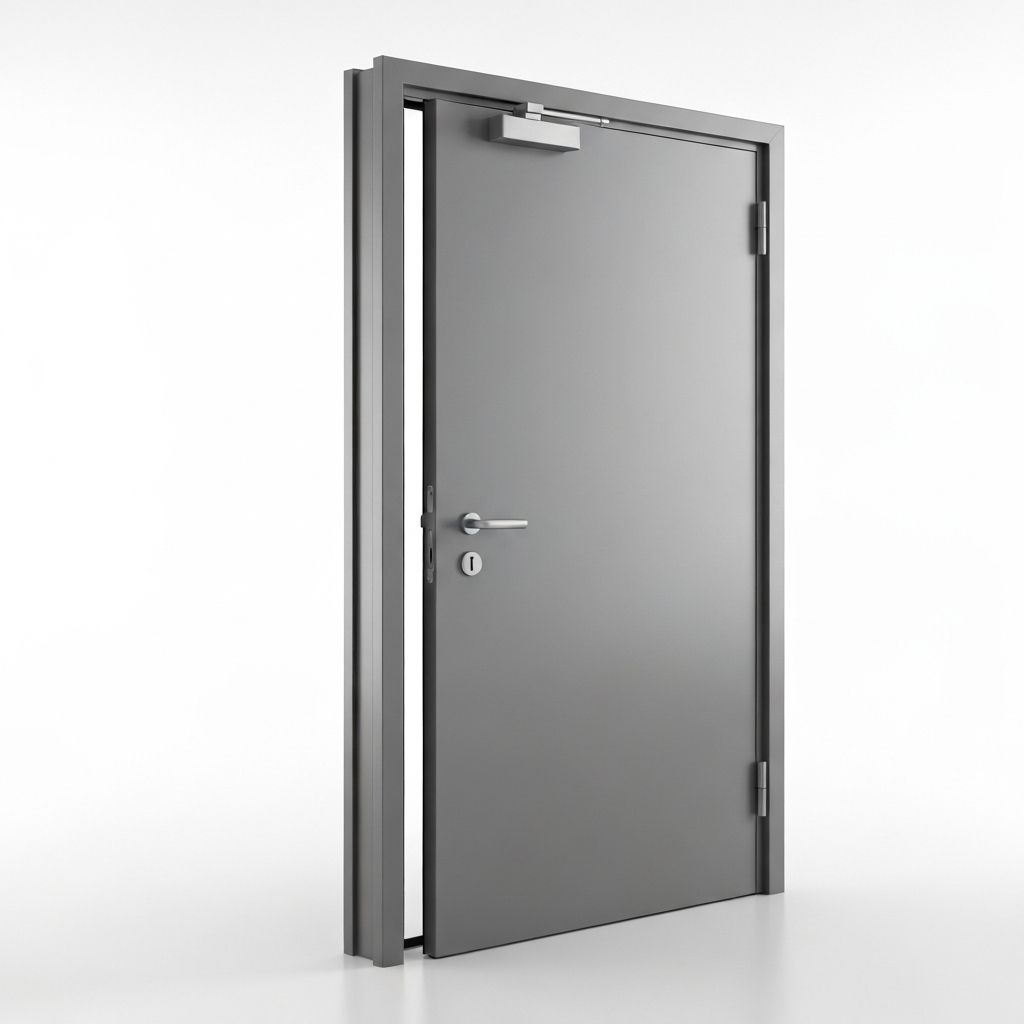
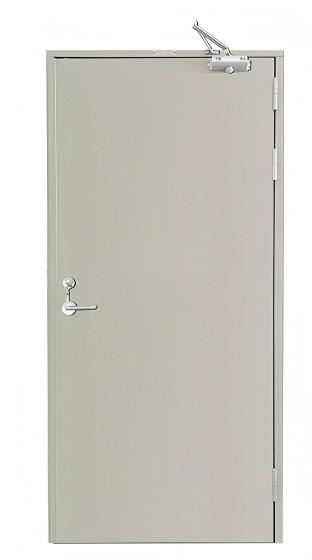
The hardware chain for a typical single-leaf fire door in an egress path:
| Component | Function |
|---|---|
| Fire lock or latch | Holds the door closed against pressure, keeping smoke and flame from pushing through |
| Door closer | Returns the leaf to the frame after every opening |
| Hinges | Carry the weight and must resist distortion under heat |
| Intumescent seals | Expand when temperatures rise, blocking gaps |
| Fire door coordinator | (Double doors) Ensures inactive leaf closes before active leaf |
Remove any one piece, or replace it with a non-certified alternative, and you no longer have a fire door. You have a regular door that looks fire-rated. That's a dangerous thing.
NFPA 80 is very direct about this: fire door assemblies must be inspected and tested at least annually, with a written record signed and kept for review. Even "no missing or broken parts" is an explicit inspection criterion.
3. Starting the Chain: Fire Door Locks and Latches
Let's begin at the point where most people's attention stops: the lock.
A fire-rated lock isn't merely a security device. Its job in a fire event is to keep the door leaf positively latched against the frame so that pressure differentials—which can be severe in a developing compartment fire—don't blow the door open. This is what the standards call "positive latching." Without it, the best closer in the world means nothing.
Key Selection Criteria
-
The latch bolt must engage fully into the strike. A deadlocking latch bolt is generally preferred—it prevents the latch from being pushed back by pressure or tools.
-
On egress doors, the lock must allow free exit at all times without the use of a key, tool, or special knowledge. This is non-negotiable under life safety codes.
-
The lock body, latch, and strike must be tested as part of the fire door assembly. A lock that carries a fire rating on paper but hasn't been tested with the specific door and frame it's going into is not compliant.
Common Failure Found During Inspections
The latch doesn't fully project into the strike because the door has sagged on its hinges. The closer does its job and pulls the door to the frame, but the latch never actually engages. The door looks closed. It isn't latched. In a fire, it could open from pressure alone.
Market Context
The global fire door hardware market was valued at approximately USD 1,425.75 million in 2024 and is projected to reach USD 2,463.50 million by 2032, growing at a CAGR of 7.4%—with door closers accounting for the largest product segment at around 28.6% share.
4. Closing with Confidence: The Role of the Fire Door Closer
If the lock is the anchor, the closer is the engine.
A fire-rated door that stands open when a fire breaks out is worse than useless—it's actively dangerous. It provides a path for smoke, which kills far more people in fires than flames ever do. The closer's job is to make sure that, after every single opening, the door returns to its closed and latched position. No exceptions.
What a Properly Specified Fire Door Closer Must Deliver
| Feature | Purpose |
|---|---|
| Controlled closing speed | Firm enough to overcome latch resistance and air pressure differentials, but not so fast it creates a hazard |
| Backcheck functionality | Cushioning that prevents the door from being thrown open violently |
| Adjustable closing force | Accommodates different door sizes and weights |
| Thermal resistance | Body and internal fluid must withstand elevated temperatures for the door's fire rating |
The closer and the latch have to work as a pair. A closer that's set to the minimum closing force might bring the door to the frame, but if it doesn't generate enough momentum to drive the latch bolt home, the door will bounce back open.
EN 1154 defines the test methods and classification for controlled closing cycles. A Grade 1 for Fire Behaviour is mandatory for any closer installed on a fire door.
5. When Two Leaves Meet: Fire Door Coordinators
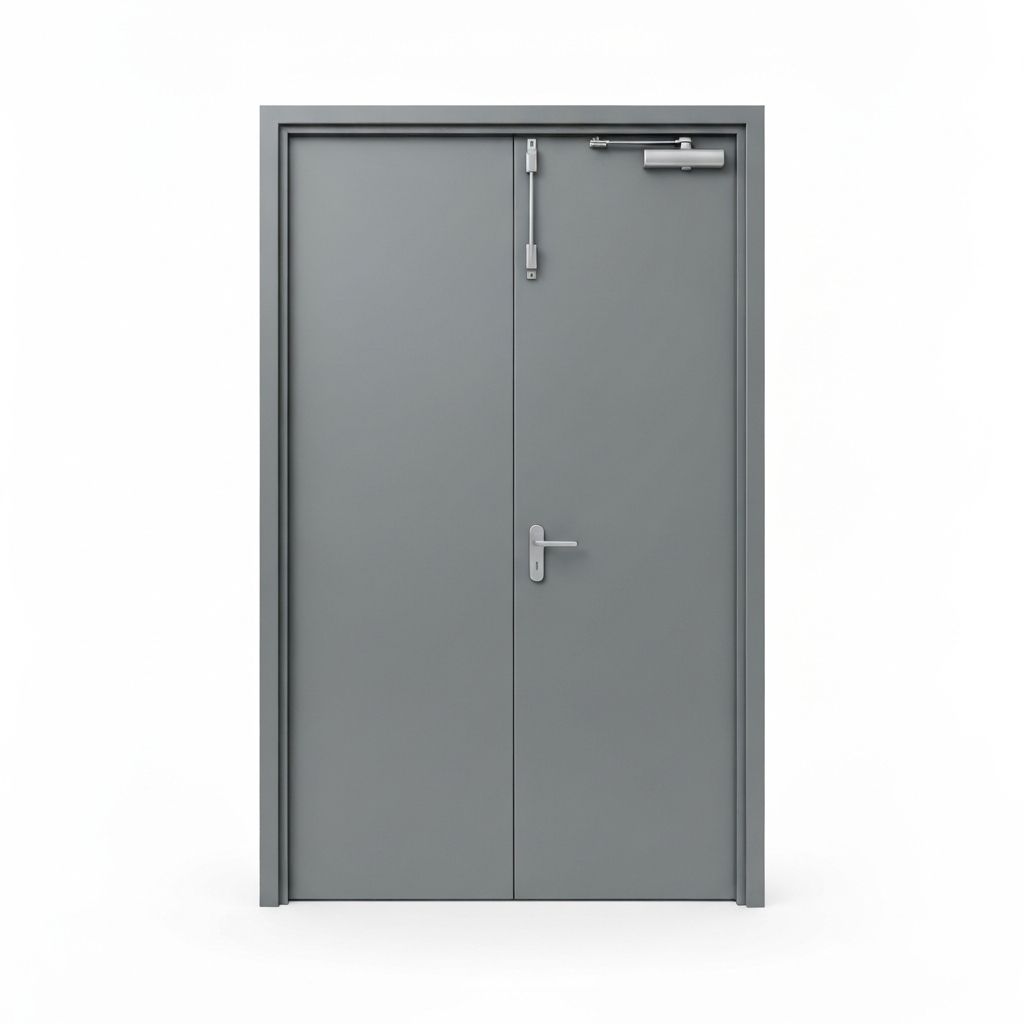
Single doors are relatively straightforward. Double doors—pairs of leaves meeting at a centre line—introduce a sequencing problem that has killed people.
Here's why. Most double fire doors have what's called a "rebated meeting stile": the edge of one leaf overlaps the edge of the other. The inactive leaf (the one that normally stays shut) must close before the active leaf (the one that's used for everyday passage).
If both leaves close simultaneously, or if the active leaf closes first, the rebate prevents them from closing at all. You end up with a gap between the leaves—a gap that smoke and flame exploit immediately.
A fire door coordinator is the device that enforces this sequence. It holds the active leaf open until the inactive leaf has fully closed, then releases the active leaf to complete the cycle.
Types of Fire Door Coordinators
| Type | Description | Common Application |
|---|---|---|
| Separately mounted | A distinct device installed on the frame head | Retrofit applications |
| Closer-integrated | Coordination mechanism built into one of the closers | New construction |
| Combined with hold-open | Handles both sequencing and hold-open functionality | Large commercial projects |
EN 1158 governs door coordinator devices for double-leaf swing doors, with Annex A specifying additional requirements for fire and smoke doors.
6. The Hold-Open Question Nobody Discusses Enough
Let's talk about convenience versus safety—the oldest tension in fire door hardware.
People prop fire doors open. They use wedges, chairs, waste bins, fire extinguishers—anything that stops the door from closing behind them. It's human nature: nobody wants to wrestle with a heavy fire door every time they walk down a corridor. And it's illegal under every major fire code.
The legitimate solution is an electromagnetic or electromechanical hold-open device. These keep the door open during normal conditions and release it automatically when the fire alarm activates or when power is lost.
EN 1155 covers electrically powered hold-open devices for swing doors. The critical requirement is fail-safe operation: cut the power and the door must close. Always. No exceptions.
Hold-Open Options That Meet Code
| Option | Mechanism | Key Requirement |
|---|---|---|
| Electromagnetic holder | Magnetic plate holds door | Releases on alarm or power loss |
| Free-swing door closer with release | Closer arm disengages during normal use | Door must close fully when released |
| Integrated hold-open closer | Built-in electromagnet within closer body | Must meet both EN 1154 and EN 1155 |
The "free-swing" option deserves extra attention. In free-swing mode, the closer arm disconnects during everyday use so the door moves with almost no resistance—great for accessibility in hospitals and care homes. But when the alarm triggers, the closer must reconnect and drive the door to the fully closed and latched position under its own power.
7. Hardware Certification: Reading Between the Lines
A lot of door hardware looks the part. The question is whether it's been through the furnace to prove it.
Key European Standards
| Standard | Scope | What It Covers |
|---|---|---|
| EN 1154 | Controlled door closing devices | Mechanical closers, test methods, fire behaviour grade |
| EN 1155 | Electrically powered hold-open devices | Electromagnetic holders, stand-alone or integrated |
| EN 1158 | Door coordinator devices | Sequencing for double-leaf doors with rebated meeting stiles |
| EN 1634-1 | Fire resistance testing | Full-assembly furnace testing; evaluates integrity (E) and insulation |
Here's a point that often trips up buyers: the EN 1154 classification code printed on a closer's body tells you a lot more than just the power size. A Grade 1 for Fire Behaviour is mandatory for any closer installed on a fire door. If you're looking at a closer that doesn't carry a fire behaviour grade, or it's graded lower than the door's fire rating demands, you're speculating. Don't speculate with fire doors.
EN 1634-1 adds the crucial principle of full-assembly testing. The complete doorset—leaf, frame, hinges, closer, latch, and intumescent seals—goes into the furnace and gets evaluated as a unit. You can't test components in isolation and assume they'll work together.
8. How Manufacturers Build the Complete Assembly
A responsible fire door manufacturer doesn't just produce door leaves and frames, then bolt on whatever hardware the customer requests. They engineer the complete assembly:
- Door leaf and frame matched as a system
- Hinges rated for the door's weight under heat
- Closer sized to the door
- Latch tested with the frame profile
- Intumescent seals matched to the gap dimensions
- Coordinator (for double doors) ensuring correct closing sequence every time
Four Things to Evaluate When Working with a Fire Door Manufacturer
-
Third-party certification: Does the manufacturer hold certification from an accredited testing laboratory for their complete door assemblies?
-
Hardware specification discipline: A good manufacturer will tell you which hardware is approved for their doors and which isn't.
-
Full traceability: Every component in the assembly should be traceable back to its production batch and test report.
-
Post-installation support: Fire doors need annual inspection and periodic maintenance.
9. Key Hardware Configuration Comparison
| Door Configuration | Core Hardware Required | Governing Standard | Common Oversight |
|---|---|---|---|
| Single-leaf fire door (egress) | Fire-rated lock/latch, controlled closer, intumescent seals, rated hinges | EN 1154, NFPA 80 | Closer under-sized; latch not fully engaging |
| Double-leaf fire door (rebated stiles) | Above + fire door coordinator + flush bolts on inactive leaf | EN 1154, EN 1158, NFPA 80 | Coordinator missing or disconnected |
| Fire door with hold-open | Above + electromagnetic/electromechanical hold-open device | EN 1154, EN 1155, EN 1158 | Release not tested with building fire alarm |
| Smoke control door | Gasketing and seals tested for smoke leakage + self-closing device | EN 1634-3, NFPA 105 | Smoke seals omitted or incorrectly installed |
10. Market Data: Where the Numbers Point
The global fire-rated door market was valued at approximately USD 13.2 billion in 2024, projected to grow at around 4.2% CAGR through to 2034.
On the hardware side specifically: the fire door hardware market stood at roughly USD 1.43 billion in 2024 and is forecast to reach USD 2.46 billion by 2032, a 7.4% CAGR. North America holds the dominant share at approximately 32.7%, with the US alone representing 19.4% of global demand.
The hardware segment's faster growth rate compared to the door market as a whole speaks to a dynamic worth noting: even where new construction may level off, the replacement and retrofit cycle for fire door hardware continues—driven by enforcement of annual inspection requirements, building upgrades, and the straightforward reality that closers, latches, and coordinators are wear items. They don't last the life of the building without service.
11. Final Takeaways
Fire door hardware isn't a commodity category where the cheapest option will do. It's a life-safety system where every component depends on the next.
Principles to Hold Onto
-
Treat hardware selection as systems engineering, not parts picking. The lock works with the closer. The closer works with the coordinator. The coordinator works with the door leaves. Break one link and the chain fails.
-
Insist on assembly-level certification. A CE mark or UL listing on a component is necessary but not sufficient. The question is whether that component was tested inside the specific door assembly it'll be part of.
-
Don't skip the coordinator on double doors. It's the single most frequently forgotten piece of hardware in fire door installations—and one of the most dangerous omissions.
-
Plan for inspection from day one. Fire doors must be inspected at least annually under NFPA 80 and equivalent codes. Select hardware that is serviceable, adjustable, and designed with inspection access in mind.
-
The hold-open solution should make wedging unnecessary. Give building occupants a legitimate, code-compliant way to keep doors open during normal conditions, and compliance becomes something that works with human behaviour rather than against it.
Fire-rated hardware doesn't get second chances. It works the first time, or it doesn't work at all.